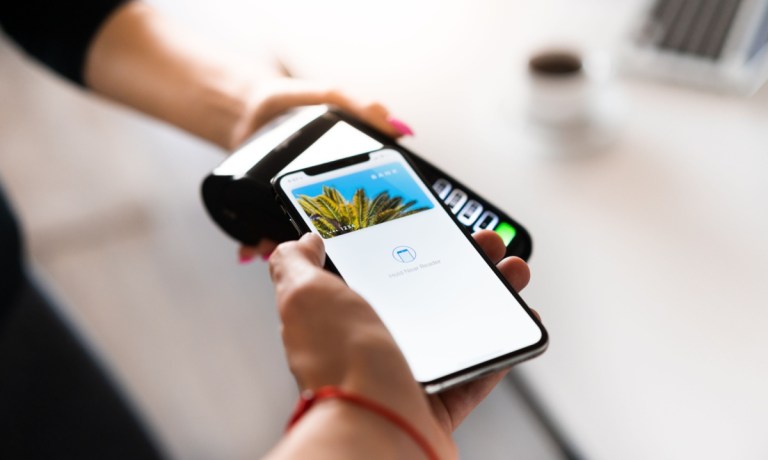
The report finds that Apple Pay continues to expand, but not at the pace suggested by the broader rise in mobile wallet use. The study, based on a survey of 3,339 U.S. consumers conducted from mid-August to late September 2025, shows weekly in-store mobile wallet use has more than doubled year over year.
At the same time, Apple Pay’s share of eligible in-store transactions reached 10.2%, up slightly from 8.9% the prior year. The payment method’s annual in-store sales volume rose to an estimated $450 billion, an increase from $268 billion in 2024.
But the report stresses that these gains reflect a wider trend across digital wallets, not a unique acceleration for Apple Pay. Competitors such as Google Pay, PayPal and Cash App also nearly doubled their user counts, narrowing the gap in overall adoption.
Key findings include:
- Mobile wallet use in stores surged to 31% of consumers, up from 14% a year earlier. Millennials led the growth, with nearly half using a mobile wallet in the past week, a 112% increase over last year. Baby boomers remained the smallest user group at 7.9%, yet their usage grew 147% year over year as adoption spread across age groups.
- Apple Pay is used for only 10% of eligible in-store purchases despite high acceptance. About 85% of merchants now accept Apple Pay, and nearly 60% of consumers own an iPhone, but the payment method accounts for less than 5% of total transactions and only 10.2% of transactions in situations where it could have been used. Growth remains steady but incremental.
- Competitors are expanding faster than Apple Pay in user count. Google Pay usage more than doubled, and PayPal and Cash App nearly doubled. Although Apple Pay still has the highest share of people who have tried it at least once, that advantage is shrinking as consumers sample more wallets. Online, Apple Pay widened its lead in growth, but the pattern of rising competition held there as well.
The report also examines why consumers first try mobile wallets and what keeps them using the technology. Ease of use is the leading motivator across the population, particularly for Gen Z, who value speed at checkout. Older users often cite security as the main reason for adopting mobile wallets, and high-income consumers tend to experiment with wallets out of interest in new technology.
Advertisement: Scroll to Continue
The findings show that the factors driving first-time use differ from the ones that influence long-term behavior.
A notable trend involves the funding sources behind mobile wallet transactions. More users are paying through stored digital cash balances, with usage rising from 1.0% to 3.7% of in-store transactions between 2023 and 2025. Debit and credit still dominate as underlying payment methods, but the shift toward digital balances shows how wallet ecosystems are creating their own form of spend rather than simply routing card transactions.
At the same time, debit and credit card usage as primary tender has stayed steady, suggesting that mobile wallets are gaining share largely from cash rather than from card payments.
As mobile wallet use continues to rise, the picture that emerges is less about one dominant player and more about a crowded field moving in the same direction. Apple Pay is growing, but so are all of its competitors, and the momentum is shared more than it is captured.