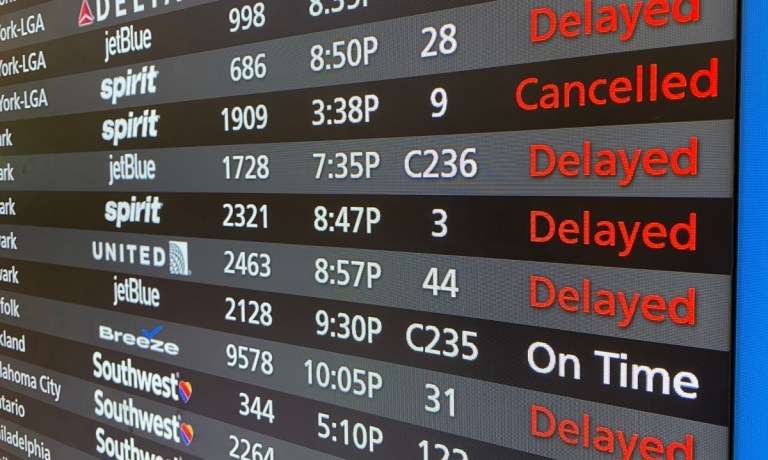
In a document filed Friday (Nov. 14) with the Federal Register, the Transportation Department said it was rescinding the Biden-era proposal that would have refunded passengers up to $775 for delayed and called flights.
According to the filing, the order is in line with two executive orders from President Donald Trump: One calls on federal agencies to “reduce regulatory burdens,” while the other directs agencies “to identify and to repeal or to modify regulations that are unlawful or unauthorized.”
Instead, the department said it would continue to allow airlines to “compete on the services and compensation that they provide to passengers.”
The filing was flagged in a report by The New York Times (NYT), which said airlines had resisted the rule, arguing it exceeded the government’s authority and would lead to steeper fares. Airlines for America, a trade association, said that air carriers already offer some relief for inconvenienced passengers.
“A4A carriers provide automatic refunds for significant delays and cancellations if a passenger chooses not to be rebooked, and they have competitive policies regarding reimbursements for food, transportation and lodging for cancellations and significant delays within a carrier’s control,” a spokeswoman told NYT.
Advertisement: Scroll to Continue
The rule was announced last April, aimed at making it easier for travelers to obtain refunds if a flight is canceled or “significantly” changed. It also mandated refunds for passengers with checked-in bags that were “significantly” delayed or who did not receive the extra services they had purchased.
“The new mandate is set to transform the landscape of air travel, ensuring that passengers are no longer left in limbo when their travel plans are abruptly altered,” PYMNTS wrote at the time. “After all, flight cancellations are enough of an inconvenience that customers shouldn’t also have to jump through hoops to be appropriately compensated for their troubles.”
The NYT report also points out that a group of 18 Democratic senators sent a letter to the Transportation Department urging it to keep the protections in place, calling cash compensation a “common-sense proposal.”
This change is happening at a time when consumers are looking to streamline their travel arrangements, with research by PYMNTS Intelligence showing smartphones becoming the default way to pay for transportation.
“More than 7 in 10 U.S. consumers prefer to buy local rides or transit tickets on mobile devices, and nearly 6 in 10 do so for long-distance trips and rental cars,” PYMNTS wrote last month. “The mobile-first pattern is more pronounced for travel than for retail, restaurants or groceries.”